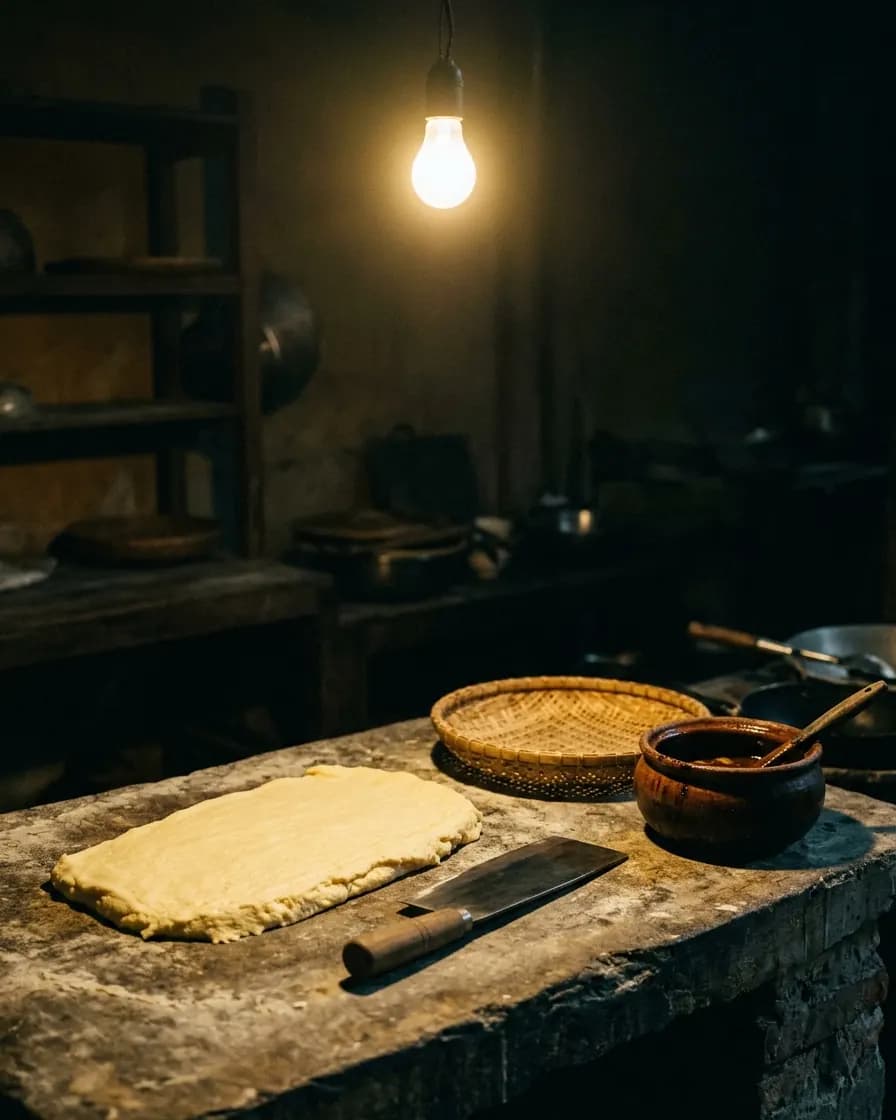
The bakery in the 11th opens at 6:40
Étienne Lereau bakes about 640 baguettes every morning and refuses to sell sliced bread. We stood behind his oven for a week.
By Do Minh KhueParis2 min read
In this story
Four things in a loaf
In France, a baguette can only be called a tradition if it is made from four things: flour, water, salt and yeast1. No additives, no freezing. Étienne Lereau, forty-four, told me this three times on my first morning, each time in the voice of someone reading back a clause from a contract.
His flour is T65, bought in fifty-kilo sacks. The mixed dough is retarded for sixteen hours at 4°C. He doesn’t use dried yeast but a little sourdough starter he has kept since 2015 and feeds twice a day, like a pet.
The night shift
The baking shift starts at half past two. Three bakers divide the dough, shape the loaves, lay them on linen couches and score five diagonal cuts with a razor blade clipped to a wooden stick. The cuts decide how the loaf opens in the oven. Étienne checks every tray by eye. When a tray is scored unevenly he says nothing; he just slides it back to whoever did it.
The stone-deck oven runs at 250°C, and a baguette takes twenty-three minutes. Out of the oven the crust crackles for a few minutes, a sound the bakers here call the bread singing. The shop turns out about 640 loaves a morning in three bakes, the last one at eleven for lunch.
By the second morning I was allowed to carry trays. By the fourth I was allowed to score, on the condition that my loaves went into a separate basket by the till marked with a piece of tape. They sold anyway. A woman in a green raincoat bought two and told Étienne, kindly, that they looked like the ones her son made at school.
Sliced bread is bread that has given up.
Seven in the morning
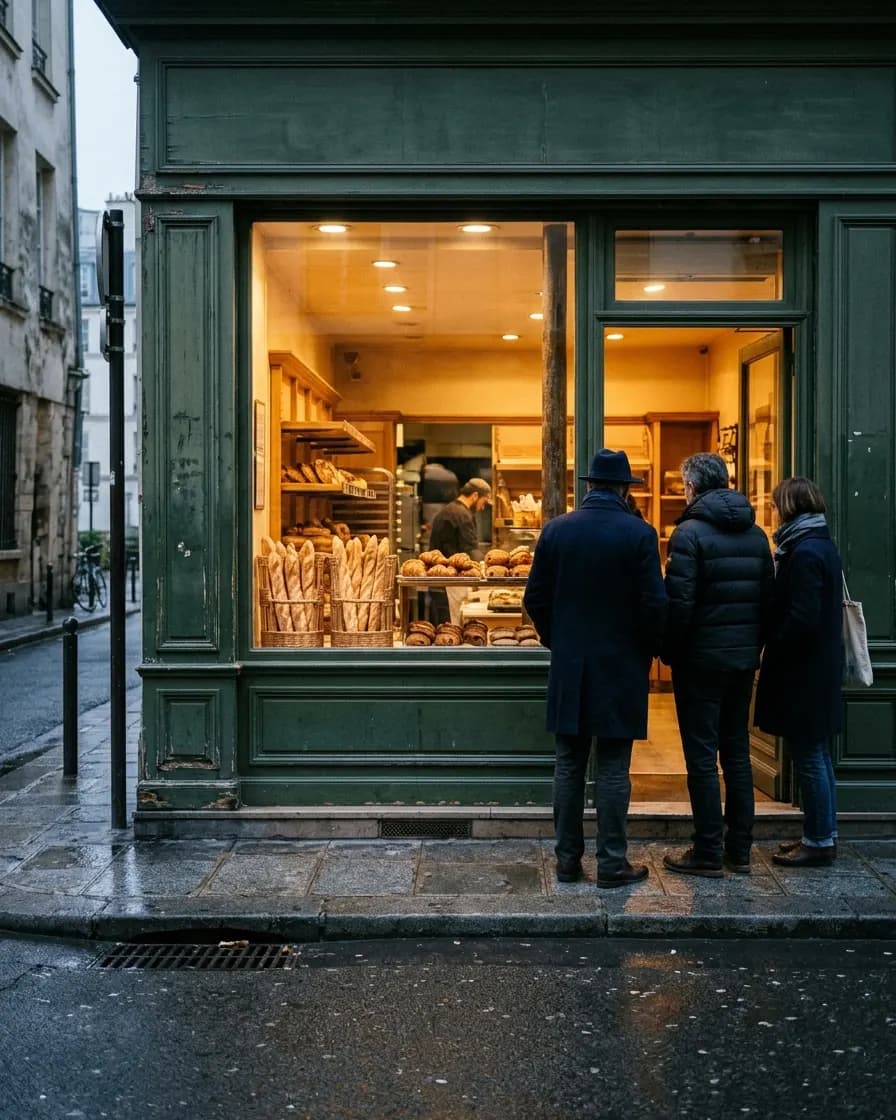
The shop opens at 6:40 to two people: a nurse coming off a night shift at the Saint-Antoine hospital and a man who walks a very old dachshund and buys one croissant for himself and the end of a baguette for the dog. By seven there are six in the queue, by half past seven fourteen, and the queue bends round the corner into the side street where the bakers smoke in the doorway of the flour store.
In November it is still dark at seven. The street is wet, the sky is the colour of a pigeon, and the shop window is the only warm light on the block. Étienne’s wife, Amina, runs the till. She knows most customers by their order rather than their name, and she starts wrapping before they reach the counter.
One euro thirty
A tradition at Maison Lereau costs €1.30. A croissant is €1.60. There is no bread slicer in the shop. If you ask, he hands you a whole loaf with the advice to tear it. Most customers live in the neighbourhood and buy two a day: one to eat on the walk home, one for dinner.
I asked whether he had thought about opening a second shop. He had worked it out: two shops means he can stand at only one oven each night, and the bread in the other would be someone else’s bread. “I’m not saying other people’s bread is bad,” he said. “I just don’t want my name on it.”