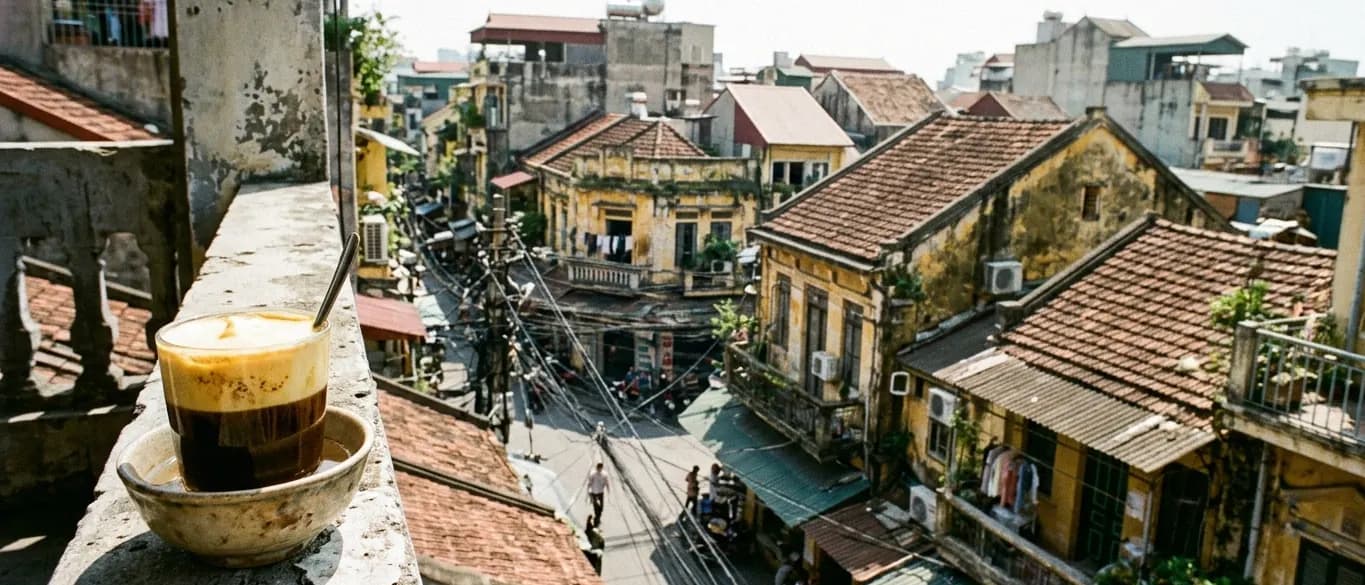
The stockpot that wakes up at two in the morning
A pho shop with no sign in an alley off Hang Chinh street, and a woman who hasn’t slept past five in thirty years.
By Do Minh KhueHanoi3 min read
In this story
Two in the morning
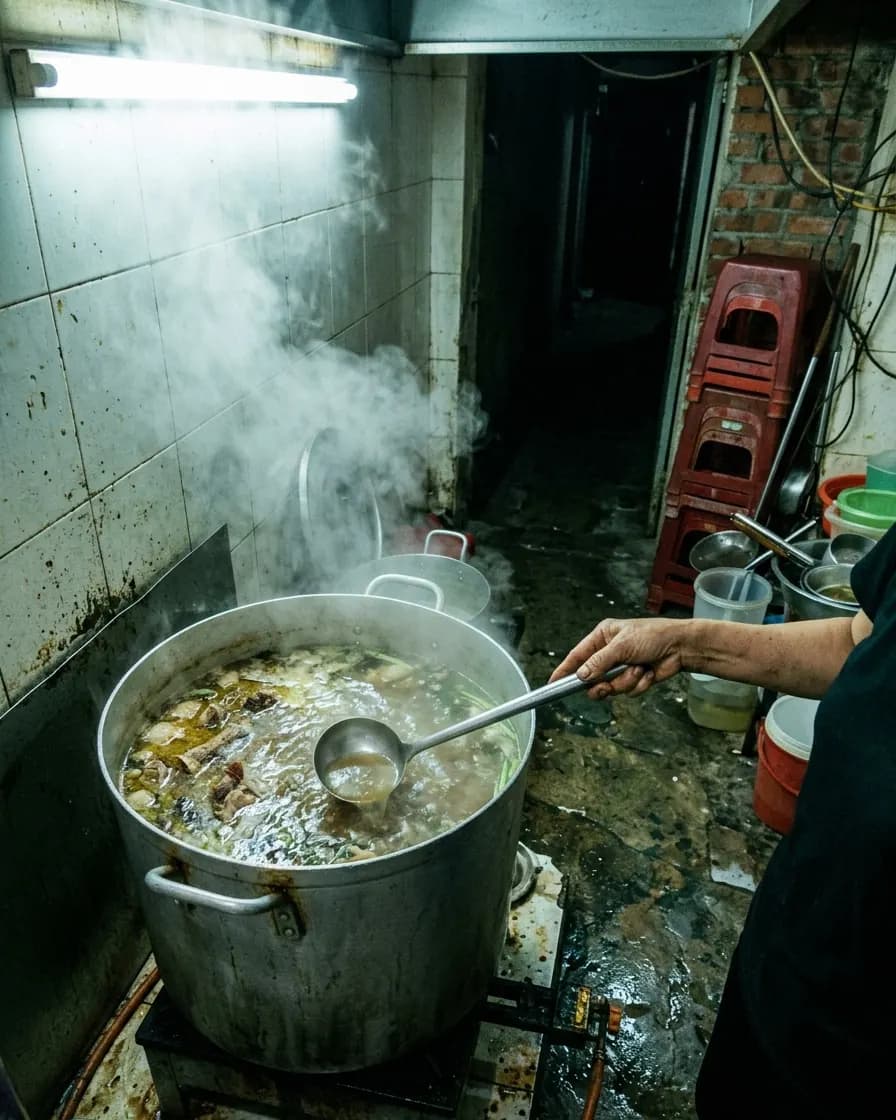
Nguyen Thi Tu wakes at 1:40, ten minutes before her alarm. The first thing she does is lift the lid of a fifty-litre aluminium pot that has been ticking over since the previous afternoon, skim the last of the foam and taste a spoonful. She doesn’t measure the salt. Her tongue, she says, was calibrated in 1994, the year she took the shop over from her mother-in-law.
Beef leg bones are blanched twice before they go in. Ginger and shallots are charred on a honeycomb coal stove until the skins are black, then scraped clean. Cinnamon, star anise and black cardamom are toasted in a dry cast-iron pan. Every pho cook knows that part. The difference, she says, is time: fourteen hours and no more, because past fourteen the broth turns cloudy and tastes of glue.
The kitchen is the front room of the house. A single fluorescent tube hangs from the ceiling, the same tube, she says, since 2011. At two in the morning it is the only lit window in the alley, and the cats know it.
Fourteen hours
The broth for tomorrow starts at noon today. Mrs Tu buys the bones herself, at a stall in Hom market where the butcher keeps the leg bones aside for her and charges 65,000 dong a kilo. She takes twelve kilos, which fills the back of her motorbike and half of the front footrest. At home the bones are split with a cleaver on a tree-stump block, soaked in cold water for an hour, then blanched: brought to a hard boil, drained, scrubbed under the tap, and boiled again.
The second blanching is the step most shops skip, she says, because it costs an hour and a lot of gas. It is the reason her broth is clear enough to read through. When the bones go into the big pot at about two in the afternoon, the water should never boil again, only shiver. She checks it every hour until ten at night, sleeps from ten to half past one, and checks it again.
Fish sauce goes in last, at four in the morning, from a plastic bottle with no label that a cousin brings from Phu Quoc twice a year. Rock sugar goes in with it, a piece the size of a thumbnail. Then the pot is moved off the coals onto a gas ring at the front of the shop, where it will stay at the same lazy shiver until the last bowl.
Red tables, low stools
There is no sign. Five red plastic tables, twenty stools, a glass cabinet with beef hanging inside. First-timers walk straight past unless they notice the motorbikes parked solid at the mouth of the alley at six. Regulars order in shorthand: one rare, less noodle, one brisket well done, extra spring onion, two like yesterday.
Her daughter Hang does the slicing. Fillet for the rare bowls is cut across the grain, thin enough to see the knife through it. Brisket is boiled separately and left to cool before slicing, so the fat stays firm. A bowl costs 45,000 dong; a poached egg is another 10,000. The price hasn’t moved since before last Tet1.
Good pho isn’t about what you put in the pot. It’s knowing when to stop.
When the pot runs dry
The shop sells until about nine, when the pot is empty. There is no second pot. Latecomers get a short apology from Hang, het nuoc roi, the broth’s gone, and in this alley those three words carry the weight of a no-entry sign. Mrs Tu tried cooking a second pot once, in 2008. That was the week the regulars started complaining.
I asked whether she planned to pass the trade on to her daughter. She looked over at Hang and said it can’t be passed on in words, only in the number of mornings you get up early. Hang has been getting up for eleven years. By her mother’s count, she needs about ten more.